Dan Decibel sure does & its magnificent.

When I hear people talk of fly fishing as a sport, I silently disagree and hope that they might someday evolve and recognize it in its purest form, a lifestyle.
While it may seem off-putting or elitist to say, its truly how I feel. To me, its more than reaching for a different piece of equipment when I’m fishing. Fly fishing is what bends my perception of this planet. You know, the one that sports a surface made up primarily of water. I see through that lens when I view my day, week or future years. When I talk with friends, it is always there, even if just below the surface.
Fly fishing wasn’t always that for me, but it has been now for so long, I have a hard time remembering it any other way.
As a kid, I travelled a lot on summer breaks from school. Camping our way from Memorial Day to Labor Day, my family and I have explored all over the United States and Canada. My memories from those adventures are cherished, yet more recent travels spurred by fly fishing have meant more to me.
The reason for the enhanced quality of the fly fishing travel is certainly due to the bonds that were made and kept with fellow anglers that accompanied me.
There have been many fish caught and released along the way, yet its the camaraderie that my memory keeps vivid.
Sports have seasons, competition and champions. The fly fishing lifestyle I’ve grown to love has none.
When I see companies that recognize that lifestyle matters more than SPF factor and how waterproof a bag might be, I’m more inclined to spend my money with them.
Howler Brothers is one such company. If you don’t get the sense that these guys are living a lifestyle, you may not have a pulse or have given up on life.
Fly Fishing is calling, will you Heed the Call?
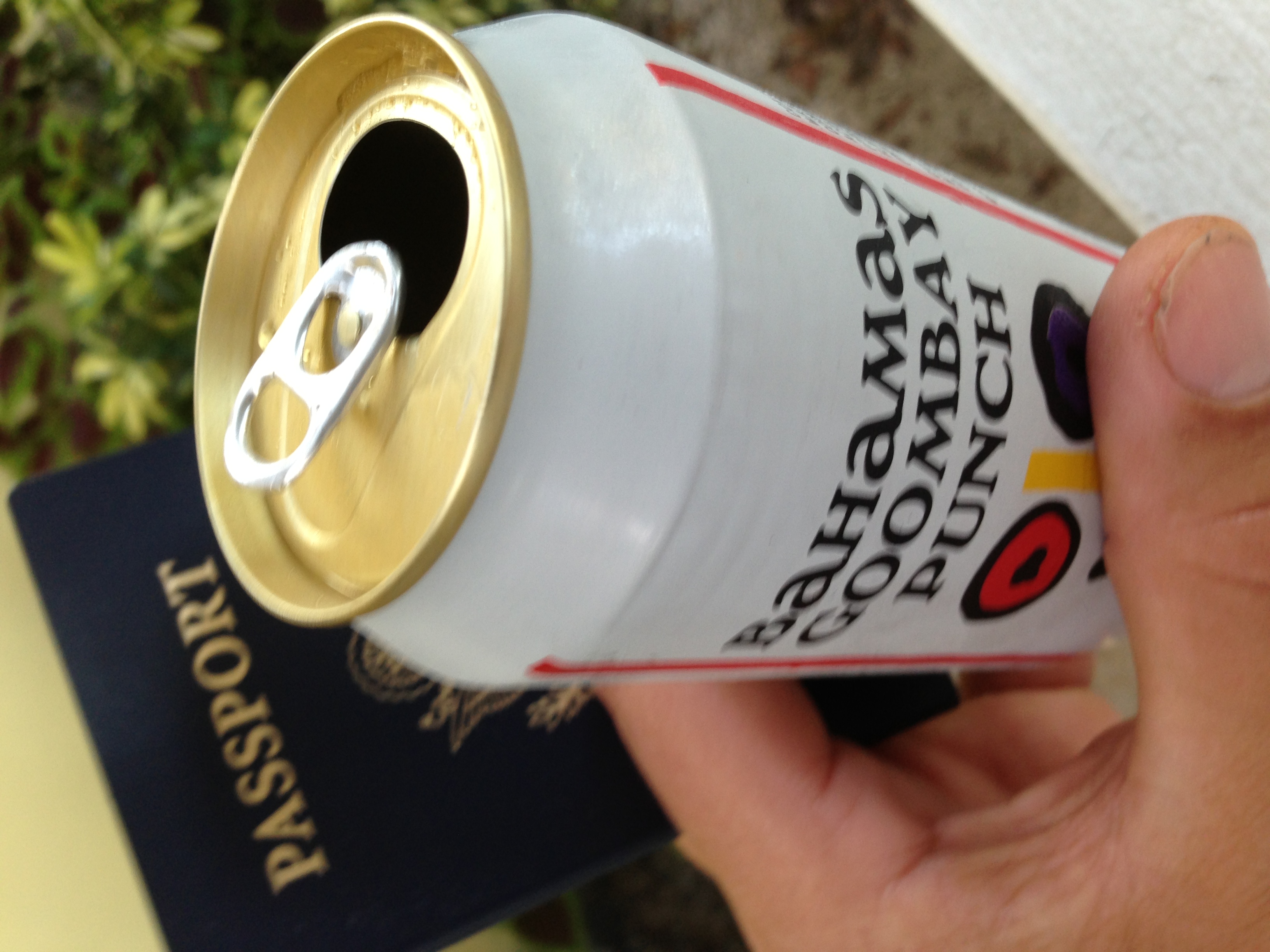
One of my partners in crime recently found out that we have been granted access to a condo in the Bahamas when we want to take advantage of it. The news sent my mind reeling with thoughts of morning tides that overtake mangrove propagules that have taken root in soft marl in the far reaches of a coastal creek.
The image of sunlight flashing from an upturned tail breaking the surface draws me like a moth to flame.
I have things that could be more productive that need to be down, yet I pour over aerial maps on Bing and Google looking for areas of promise that will soon be within reach.
To me there is nothing more rewarding than plotting a course that takes me to a new area where I think bonefish will await my unfurling loop of fly line.
The hunt is still a ways away, so for now I’ll continue to plan.
When I step into the warm salty waters somewhere within the archipelago of The Bahamas, I’ll be ready.
Everyone finds a time in their angling pursuits when they want a shorter sinking head or needs to repair one. Rio provides a great, easy to follow tutorial on how to get the job done.
If you have a question on which Rio Fly Line is best for your application, they have a Mobile App for that. Download it by clicking here.
I recently completed a wonderful multi-day trip in Florida Bay, staying a few nights under the clouds and stars atop a Chickee in Everglades National Park.

The weather was a bit chilly and the wind was blowing near a gale for a good portion of the trip, but the fish didn’t seem to mind too much.

I’m no trailblazer in this regard. Lots of folks have been there & done that, as will many more to follow.
If you haven’t, drop it in the proverbial bucket and make sure you reach in and fish it out before you die.
Sitting in the dark over the clear briny water watching the bioluminescent algae flash in pulses reminiscent of lightning bugs on a cool August evening in Appalachia will enlighten you and draw you closer to nature in a way that is hard to explain. Its no wonder ancient tribes had such respect and viewed their environment in such reverent awe.
Below is a great example of an Over Night from Livit Films.
As you can see the opportunities in the Everglades are vast and friendships simply grow stronger there.
Now for the Public Service Announcement portion of this entry:
I run a tiller skiff. Its my preference when it comes to how to operate a vessel. I feel in touch with the water in a way that is hard to reduce to words. I respect it too.
Years ago, I was running a tiller skiff across a deep basin in an estuary in Central Florida when the lower unit collided with a marine mammal of greater mass. In the blink of an eye, I was sent headlong into the water as the skiff turned a sharp 45-90 degrees and was suddenly no longer beneath me.
When I emerged from below the surface, I was met with silence, but for the rhythmic splashing of my wake lapping the waterline of the skiff where she sat a few dozen yards away.
A great friend had always demanded the kill switch be worn when we duck hunted and the habit had stuck.
If it had not been for that switch and lanyard, I may have been in for a long swim or worse.
In a nut shell; if you’re operating a vessel, especially a tiller steering equipped skiff. ALWAYS WEAR YOUR KILL SWITCH LANYARD.
That concludes this PSA, brought to you by the wet guy dragging himself across the gunnel to fish another day.
“Then we got into a labyrinth, and, when we thought we were at the end,
came out again at the beginning, having still to see as much as ever.”
― Plato
I try to take something away from every outing on the water. A little moment or big, it doesn’t matter; just a piece of the puzzle that fits into the ever sprawling mosaic of experience that builds my bigger picture of fly fishing.
As the sun sank to my west, I stood in the cockpit of my skiff and chased it towards the horizon. Lying before me was the gear I had needed to be self reliant for a couple of nights in Everglades National Park.
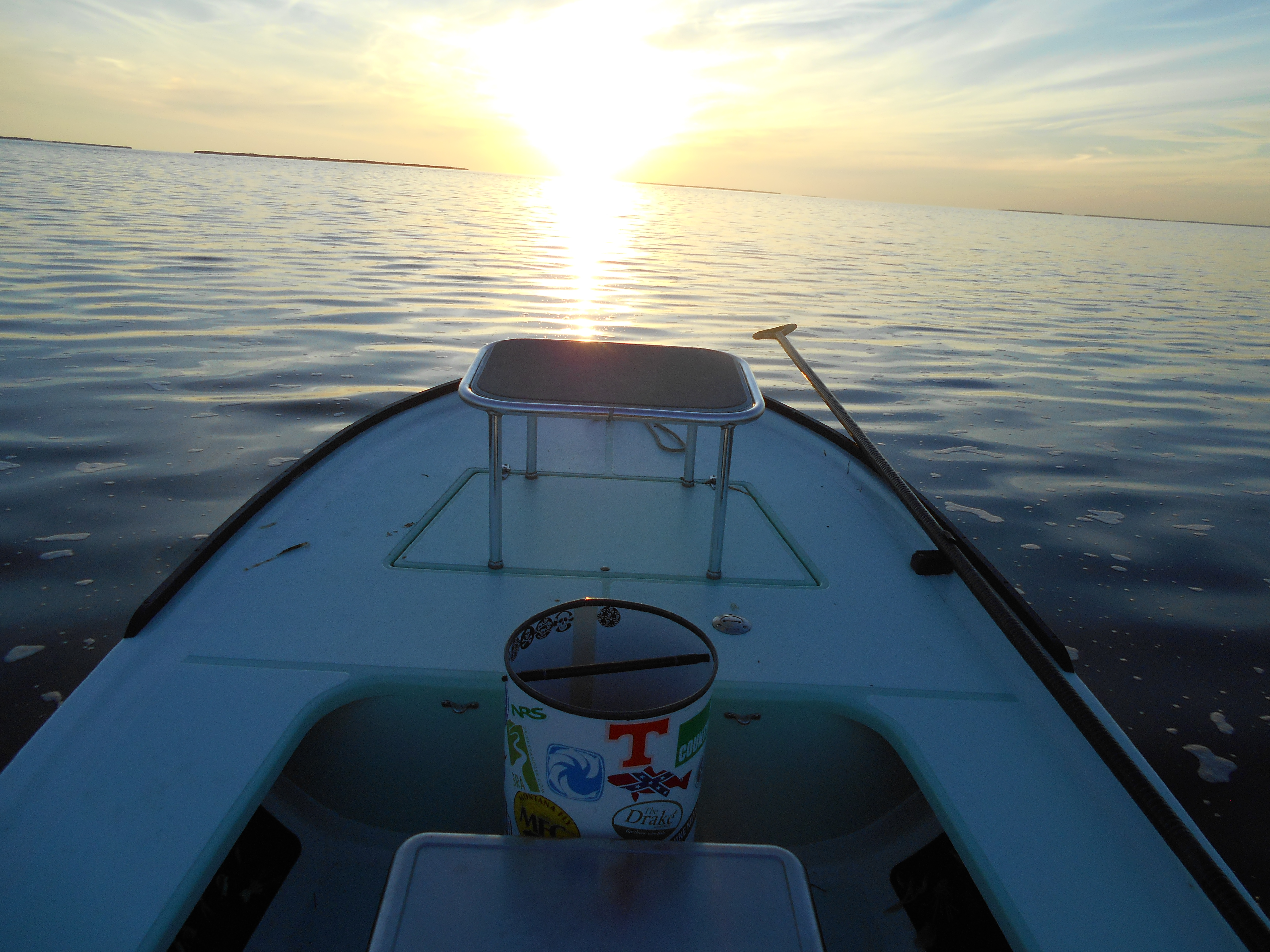
The feeling I had was one of achievement. I had arrived with a few goals in mind and I had checked them off the list along with a couple more that were simply icing on the cake.
The trip was made in the company of a great friend and fellow fly angler.
The great feelings aside, we learned a lot and more importantly, nourished the desire to return and build upon it.
“Chaos is inherent in all compounded things. Strive on with diligence.”
– Buddah
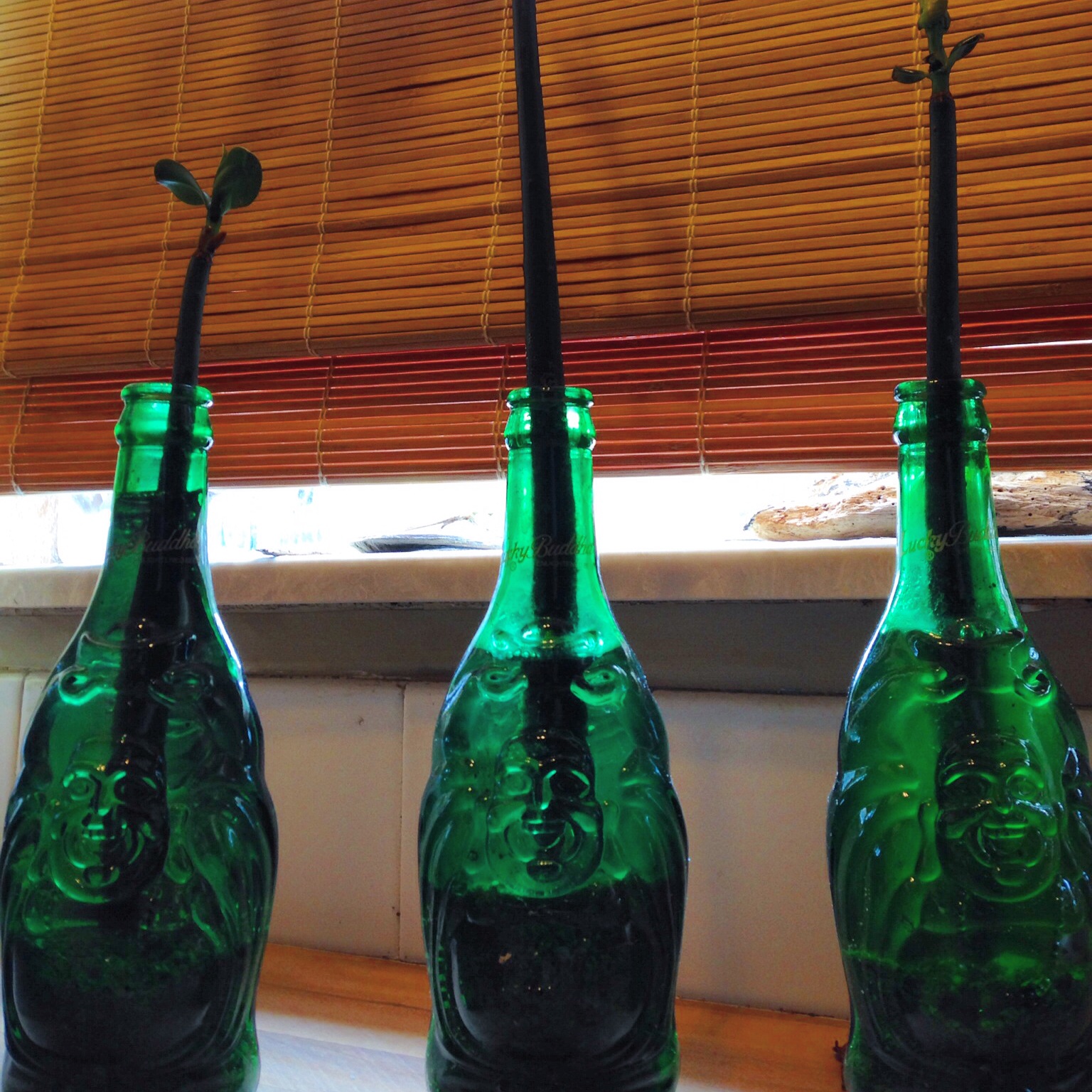
A lot goes on in my mind when I’m standing on the bow of a skiff awaiting a glimpse of the intended target of the day. Whether it be a bonefish, redfish or tarpon the decision making process remains the same. The responses vary and their sum total dictate the difference between success and failure.
Understanding how to best choreograph your response in the face of chaos will dramatically improve your results.
I find it helpful to draw from past training that was unrelated to fly fishing and apply its principles to help me on the water.
The training highlighted the human decision making process. A simple acronym of the equation OODA sums it up.
It translates to Observe + Orient + Decide = Act.
It describes what we as humans do all day long, every day, as we move through life. How well you apply it in specific, performance driven, instances directly relates to how successful we will be in that particular endeavor.
My son and I exploit each other’s failure in the Observe part of the equation routinely around the house. Its a never ending game. One of us lurks around a corner or behind a piece of furniture awaiting the other to casually pass by, oblivious of the others presence. When one of us strikes, the victim is typically left reeling, trying to recover from being startled, sometimes to epic proportions.
When on the water, I do my able best to observe my entire surroundings. The Observe component is important. Your situational awareness has to be on point to spot fish at a distance. The further out you can set your range, the more time you’ll have to complete the remaining portion of the equation.
Orient is a simple way of describing the process of recognizing what is happening within your immediate focus and situate yourself for a response. When you have inadequate time to orient, chaos follows.
Once you have processed the observation and orient to meet its particular challenge, you’ll only then come to a decision on how you’ll respond. The Decide portion of the problem in my opinion is where the game is won or lost. Taking time to process the information you’re absorbing properly allows you to execute a cast when and if its time to do so.
In real world, daily life, the Decide component is often the easiest to parse and thereby get yourself in trouble. Think of it in terms of traveling down the interstate at 65 MPH with only 5 feet between your bumper and the car in front of you. The best mind can’t complete the Observe, Orient & Decide in that space. You’re going to end up making an insurance claim if you make it a habit.
On the water it most likely means a lot of missed shots and blown out fish.
By compressing the OOD, you’ll have ample time to Act.
Be diligent in the complex portion of the equation where you have to recognize an opportunity, prepare your response and decide based on great preparation to turn it into a cast. Both you and Buddah will be jolly.
By far my favorite saltwater species to target with a fly rod is the bonefish. Their attitude and aggressiveness, not to mention the backing exposure they deliver, are the best.
Most of the bonefish I’ve cast to have been Bahamian, though I’ve given it a go from the Florida Keys, South Caicos to Oahu. Most of the time its been a DIY scenario. Despite being guided a handful of times, the most rewarding trips and best memories have been when I’ve done it on my own.
By the looks of it, these guys enjoyed a little DIY bonefish action in and around Turks & Caicos.
The next time you’re thinking about heading somewhere tropical, keep in mind DIY is rewarding and achievable. Think of all the conch fritters and Kalik you could buy for $500 a day.
Every fish that comes aboard my skiff or comes to hand doesn’t get its mugshot taken, but when it happens, the subject most likely swims away muttering unspeakable things about the paparazzi.
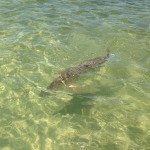
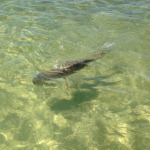
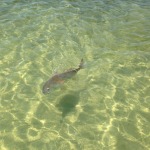
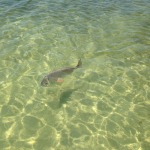
I’m a catch and release angler at heart, so photos are the hallmark of my experience. My number one maxim: The most memorable fish is the one you release.
I really focus on the fish when capturing images to document my time on the water. Sure, I include human subjects at times, but for the most part the focus is on the prize.
I’ve been taking pictures for decades. I used to burn lots of images on film back when 35 mm was king. I sent rolls upon rolls away to a mail order processor in hopes of seeing an image that was worthy of a matte and frame.
Digital changed that. What it didn’t change was the basics of photography.
My father has thousands upon thousands of 35 mm slides from travels across the world, his understanding of photography was from experience as well as formal training and I was lucky enough to have him as a coach and mentor.
His guidance built my photographic foundation and shaped how I view the world and subjects through a lens.
The Gallery above is just a random selection from a photo dump from my iPhone. It demonstrates a couple of the principles that I believe could be helpful in improving your photography skills.
Composition is King
When you frame an image, pull the subject in closer. The idea of everything in view is often the enemy of a great image. Just like having a clear focus, the composition of the entire image is better tight. Have a subject and commit to it. Put the subject in view, not just in the center, but make it dominate the frame.
More is Better
Don’t get hung up on the composition so much so that you miss the shot, you can fine tune it later with a small amount of editing. Pull in the image and start firing. I hammer down the shutter and get a handful of images. Its within the affray where I find the gems. Action begets success.
Sort it Out
Take a few moments when you get off the water to do a cursory, quick edit to discard the horrible and unusable, but be careful not to be quick to discard. Soft or slightly out of focus can often be fixed with editing and a detail within an otherwise uninteresting image may be mined out with cropping. After the initial weeding, walk away. When you come back to the images later, you’ll likely see them with a more creative eye.
Get To Know Your Camera
I shoot a lot with the camera on my phone simply because its there and easily accessible. I have a whole stable of Nikons ranging from DSLR to a basic AA battery powered point and shoot model I take on expeditions where charging batteries will be difficult. Each camera gives differing results and I know like reflex how the shot needs to look on the LCD screen to be ideal for usefulness. I only got to that point by experience with each camera. Experience came at the expense of a lot of crappy images. Now that I know them well, its become very easy and quick to compose images and capture them. A bump to get depth of field and I’m ready to roll.
Lastly, but most importantly, keep our friend’s health in mind when setting up shots. In the water, breathing, until the moment you’re ready to pull the trigger and capture your best fish.
Have you ever found a special place on the water that seems to be that out of the way location which always produces days that leave you smiling? You know, the one I’m talking about, that lonely slice of water that takes a bit of effort to reach, where you never see another soul.
The truth is, you’re not the only one that knows where it is, its just that the effort to get there limits even you and it it quickly becomes the spot reserved for special days when solitude is required and you know it can be found there, if you’re in the mood to work for it.
After a while, you’ve grown so fond of your out of the way slice of heaven that you take someone along to show them the unreal beauty and charm your little Shangri-La possesses. Even though that little voice in the back of your head cautions you to keep it to yourself, you convince yourself it will be kept in confidence, so off you go.
The magic is in the air and the birds are chirping as you and your guest revel in the moments where your rod is bent and fish come to hand in a way that never happens on a normal day, in the usual spots. You keep reminding them that the place you’re visiting is special and warrants secrecy, hoping that your trust won’t be betrayed.
By day’s end, you know that you’ve shared a truly special place and time and the allure of it is almost fairytale in its splendor, which makes you nervous.
As you finish a beer with your friend, they thank you for the special day and reassure you that the secret is going to be kept. They express reverence for the location, and pour on the charm letting you know its safe.
A month or two later, it happens. There in all of its glory, laid bare for the world to see on Instagram or Facebook is the spot you’ve cherished for so long. That place you’ve always held dear and protected. Your pulse quickens, and in mere moments, you know its over, the secret is out.
The temptation was too great for the person who didn’t earn it. They were given the privilege, and without the investment of sweat equity, they gave it away.
Worse yet, they begin to abuse it. Almost weekly at first, them more and more often, until its not just the recipient of your friendly benevolence, but now others are there and posting about too.
Forgiving those who trespass against you is tough. But truth be told, its best that you do, for they know not what they’re doing. The luster will fade on that place of beauty in due time, for once its been burned, the patina of overuse will erase it.
Don’t despair, but rather, channel your efforts in finding your next quiet corner and remember, Loose Lips Sink Ships.